giovedì 30 ottobre 2008

Mostaccioli

Typical roman sweets part 2
I Mostaccioli
Usually eaten: Christmas time
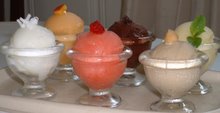
Here are the famous MOSTACCIOLI
The roman “MOSTACCIOLI”, have their origin in the ancient roman empire, as usual!
They were offered during the so called in latin "Sponsali" (marriage), the bride used to offer them to people as the modern “confetti” (bon bon).
There are 2 places were we usually buy them.
One is the pastry placed in the Ghetto between Via del Portico di Ottavia and Piazza delle 5 Scole and the second is a pastry placed in Trastevere neighborhood in Via del Moro, 37 .
You are Welcome!

giovedì 2 ottobre 2008

Pangiallo Romano

Typical roman sweets part 1
Il Pangiallo Romano
Usually eaten: Christmas time
The “pangiallo”, better known as “pangiallo romano”, is a typical roman sweet, which has its origins in the ancient Rome and more precisely during the imperial age.
It was, indeed, one of those sweets that were donated to people during the celebration of winter solstice to facilitate the return of the sun. Traditionally pangiallo was obtained through the mixture of dried fruit, honey and candied citron, which was subsequently cooked and covered with a layer of egg batter. Even durino the ancient times up to the most recent, during the preparation of the “pangiallo romano” the housewife used to put dried kernels of typical summer fruit as apricots and plums instead of the most expensive almonds and hazelnuts. The typical pangiallo romano has undergone to several transformations over the centuries due to the expansion of territorial boundaries. In the modern reinterpretation of the pangiallo romano are now added, to the traditional recipe, the following products: almonds, walnuts, pine nuts, walnuts, raisins and pistachios.
When you go to the Vatican take a few minutes walk to visit this shop and buy the typical pangiallo romano: Via tacito 78
(the link show you the distance from the Vatican square to the shop)

mercoledì 1 ottobre 2008

Bacco - tabacco - e Venere


A Latin proverb says: ""Venerem sine Libero et Cerere frigere"
It sounds more or less as:"Without Bacchus (God of wine) and Ceres (god of food), Venus (Godness of love) cools"
Herodotus tells that during the ancient time Greeks used to bring a little statue in a small wooden coffin at the end of their meal showing it to all guests saying: "Look, drink and enjoy because once dead,you'll be like him!"
Fortunately today none of us goes around showing certain things :-/ but the meaning is absolutely clear....
CIN CIN !!
Here is an address that might interest you ....mmmm....it could interest me too!
May be we'll meet there sooner or later!

sabato 23 agosto 2008

Your first “A Night in Rome”

What I would like to do on my first day in rome if I wasn’t be roman?
I think that feet are the best way to discover a city so, do you like walking? Yes?
Ok you have said it, I have heard you!
“TAKE it EASY” !!

The alarm rings at about 09:30 am
take care of you for about 45 minutes and then go out: your first day in rome starts now.

First stop: cappuccino e cornetto!!
Our preferred bar is in Piazza San Cosimato, try the cappuccino and cornetto sit outside the bar reading your roman guide; what does your guide say about the Basilica in Piazza Santa Maria in Trastevere?
Yes, cause this is your second stop: Piazza Santa Maria in Trastevere


Take time to visit the Basilica and its beautiful paintings, the Basilica probably was the first official worship site of Christians built in all Rome. Walking back home take a look on the small alley ways and stop to a bakery or a pizza shop to take something for lunch, we’re going to have a pic-nic so take all you may need!
Third stop: Bocca della Verità

be patience and don’t be afraid of the queue; take a picture of you with your hand in the fabulous mouth….. swear and not tell lies!!
Fourth stop: Circo Massimo

now you need time to rest, with your food bag go on the upper site of the Circo Massimo, the one from which you’ll have a great view on the palatine hill….
relax and enjoy this moment! Your walking day is not at the end….hihihi
Fifth stop: you are now so close to the Colosseo that you cannot miss this appointment….HEY! don’t forget the picture with the gladiators!
(The city council of Roma has finished the Gladiators like the one above, so don't be surprised if the ones you are going to meet are not as the model i showed you in the photo, i brought home with me the latest exemplary ....would to!!!)
Sixth and last stop: a walk along the Fori Imperiali straight to Piazza Venezia to see the so called “type writer” : the Vittoriano.
Your first wondering day in Roma is now at the end but before going to home have a pizza & supplì (so good....SLURP!) in a typical roman pizzeria “Ai Marmi” on Viale Trastevere, 53

Have a good night!
BUON APPETITO!!!!!!!

mercoledì 13 agosto 2008

Buon Ferragosto!!!

Ferragosto
is a popular midsummer holiday which coincides with the religious feast of the Assumption of Mary into heaven celebrated on August 15.
The most ancient origins of this event are recognized in the so called “Consualia” from the latin “Conso” god of the stored harvest. In the ancient roman times, during this day, people used to exchanged gifts with the hope of having “Bonas ferias consuales” (a sort of have a "prosperous year").
The name of the month "August" has its origin in the ancient rome back to the Emperor Caesar Augustus, this month was infact dedicated to him and the wish “Bonas ferias consuales” changed its formula in “bonas ferias augustales”, our modern "Buon Ferragosto !!".
It was the emperor's decision to combine in a single summer festivity a whole complex of festivities so called Feriae Augustii or Feriae Augustalis.
Subsequently, the Midsummer Feast taken a predominantly religious fold. On this occasion many spectacular processions were held during the night, an old image of the Savior was transported in the old city of Rome from the chapel of San Lorenzo in Laterano, today inside the sanctuary of Scala Santa, to the basilica of Santa Maria Maggiore. The image of Christ proclaimed "Acheropita" (not painted by human hand but, according to tradition, by angels) was taken by the Pope in person in the evening of August 14, placed on a canopy and transported all around the old city in the light of torches.
The procession was deleted around the second half of the sixteenth century (1550).
Subsequently, the Roman Ferragosto was linked to profane rituals such as racing horses, fighting bulls. There were also games, particularly uncivilised, as the "strappacolli alli paperi" (strangle the duck) which were abolished by Pope Innocent XI, in 1681.
Bonas Ferias Consuales !!
BUON FERRAGOSTO A TUTTI !!!!
Bonas Ferias Augustales !
HAVE a GOOD MIDSUMMER FEAST !!

sabato 9 agosto 2008

Under a falling roman sky

-ROME -

The night of wishes is arrived, the one during which we all turn our gaze up to the sky in the hope of seeing the stars fall down!!!
According to tradition would be the tears that San Lorenzo poured on the day of his torture that roaming the whole universe until they fall to earth, usually the night of August 10.
This year makes an exception, it will not be the August 10 the brighter night, but the one between tomorrow and the day after (August 11-12).

Beware, remeber yourself to be turn your gaze up to the sky again the night between August 16-17 there will be an “eclissi” of the moon, something like this......

mercoledì 23 aprile 2008

Nuove scoperte!

Rome, standing at the bus stop waiting for an invisible bus, the question is: “Why romans don’t have 5, 6 or 7 metro lines like the other capitals of the world?”
The answer is: “Because Rome hides a second ancient city under the ground level!”
(Under Venezia Square)
At Every step you take, on the ground level, remember that you are walking on a history of thousands & thousands years old!
In this post I want to show you what is hidden behind the curtain in Piazza Venezia ( excavation for the implementation of the line metro C, our 3rd line! YUPPIES!!!!!)
Archaeologists have found, one above the other, the different layers of the ancient Via Flaminia, from the ancient roman layers up to the most recent. This ancient route should have started from the current Fori Imperiali, ran around the Campidoglio and then pointed to Campo Marzio cutting, exactly in the half, the current Piazza Venezia. Opened in 223 A. C. by Caio Flaminio became one of the most important ancient Rome way but it was much used always during the Bizantine time and during the Middle Age, then restored during the Renaissance and used up to the 1800: these are the different layers that are returning back to the light under Piazza Venezia.
Look at what is coming back to light, right now………
(Furnace for the production of glass and fragments)

(Glasses of the Medioeval age)

(Metallurgical plant)

(Metallurgical fragments)

(Houses of the Medioeval ages)

(Chafing dish, IX century founded in a home)

(Typical steet of the Medioeval age)

(Medioeval furnace)

(Renaissance age)

lunedì 31 marzo 2008

Il Supplì

SLURP!!!!
The so called “supplì” fall among the myriad of snacks, and culinary "intermezzi" of which is rich the gastronomic Roman tradition.
The “supplì”, born as a "reuse" of the left over risotto, is the result of a poor cuisine culture, reluctant to waste food, but soon it became the protagonist of the country side trips for all romans! The recipe come back to the first years of 18th century when Napoleon was in Rome; the term “supplì” infact is nothing more than the roman version of the french “surpris” (surprise), and the surprise is precisely what you can find inside, today only mozzarella (in the best cases), but in origin also “regaglie” and chicken livers. In origin in Rome there was also the seller of “supplì” which ran trought the city alleys during the evening time hanging a “scaldavivande”(chafing dish) by his arm screaming:
"Calli calli! Supplì di riso!"(hot supplis!)
Until 1950 in the centre there was also, close to Sant'Andrea delle Fratte, a "supplitaro"(suppli dealer), named Polifemo, who used to stay in his lair with a huge frying pan filled with hot oil.
Today supplì are no longer like those, but you can eat good ones at "Ai Marmi"; on the other hand, if you want to eat another roman specialty, try.....
......the “filetti di baccalà” (battered and fried cod fillets) at the "Filettaro".

Take note:
Supplì, Pizza & Co: "Ai Marmi" Viale Trastevere, 53
Filetti di Baccalà: "Dar Filettaro" Largo dei Librari, 88 (close to Campo dei Fiori)
Buon Appetito!

mercoledì 16 gennaio 2008

Fish &...Church

The church of Sant'Angelo in Pescheria is one of Rome's oldest churches and still only partly excavated. It stands behind the Octavia Portico (in the Ghetto) and is one of the most interesting examples in Rome of how churches and houses were built using existing ruins of temples.

(Left: the window of the house has a view on the rear colonnade of the Portico. Right: a large fragment of the temple was used for many years as a yardstick for measuring the size of the fish)
Stefano III founded the church in the 8th century; it has been rebuilt on several occasions since then. The church was also the scene of the gathering of men by Cola di Rienzo in the mid-14th century before they went off to occupy the Campidoglio and re-establish the Roman Republic.

In the 12th century the church took its current name "in Pescheria" from the curious tradition that allowed the 'Conservatori' the right to have the heads of the longest fish from the nearest fish open market!

lunedì 7 gennaio 2008

6 January 2007


"La befana vien di notte
con le scarpe tutte rotte
vien vestita alla romana
viva viva la befana!"

Since the XIII century it is one of the most popular Italian feast long awaited by children!The name derives from Epiphany (the Greek word has an original writing), changed in Beffania to remind the "Beffania's witch" who flung on the houses roof in that night. Once left the double "f" and the "i" the word turned to Befana!
The legend tell us that one day the three Magi left their country with special gifts as Gold, Incense and Myrrh, to reach little Jesus Christ because they wanted to give him their presents. They travelled through many different countries guided by a particular star (the famous Comet) and every town they passed, people run to meet them and join them in their journey.There was only one old woman who wanted to join them but changed her mind at last and stayed at home. The day after, repented and displeased she tried to reach the Magi, but they were too far from her! Therefore the old woman didn't meet the Holy Child neither that time nor ever. Since that time the old woman (called Befana!) visits every house to give the good children all the gifts she didn't give to the Holy Child: to do that she flies on an old Broom with a big canvas sack on her shoulders in the night between the 5th and the 6th January (the same night when she, in the past, remained at her home!).
To celebrate the roman Befana's day with us we have for you a "stornello romano" (a typical dialect song)......

domenica 23 dicembre 2007

Piazza Navona


BUON NATALE & BUON 2008!!!!

Piazza Navona is arguably Rome's greatest square
The spot was originally a stadium built by Emperor Domitian in 86 AD.
Athletes competed here in honor of Jupiter and you can still visit the ruins under street level.

Christmas is the best moment to visit Piazza Navona!!
For the whole of December until the 6th January of the following year, you can purchase the whole range of Roman festive items!
Sweets, candies, chestnuts, sugared apples (la mela stregata!), the famous torrone, liquorice and much more.
The Befana arrives on the 6th January.
This is the day those children who have broken their promises or behaved naughtily receive a present of coal in a stocking, beware even if you are not a child anymore…….!!!!!!!

Look at the video and......Benvenuti al Natale di Piazza Navona!


giovedì 29 novembre 2007

Il Lupercale

The legend is now history.
The most famous place of the myth of the history of Rome, searched for centuries, appeared. The “lupercale”, or the place where the wolf would suck the twins Romulus and Remus, has been founded close to the walls of the Augustus’ home, in a valley at the slopes of the Palatine hill, in a never explored site between the Temple of Apollo and the Church of Santa Anastasia, 16 meters below the ground.

The structure, with a shape like a nymphaeum, seems to be a cave partly natural and partly artificial, about 9 meters high and with a diameter of 7.5 meters.

The micro camera showed a decorated caisson with geometric forms (not figurative) made in mosaic tiles and polychrome marble, further enhanced by rows of white shells and by the white eagle of Augusto placet in the center of the vault.
It seems that, the Emperor Augusto, built up his dwelling in that place to attach his villa to a so highly symbolic place of the history of Rome.

All happened the 21 november 2007

martedì 20 novembre 2007

Piazza Campo dei Fiori


The square of "Campo dei Fiori" in Rome is famous for the episode that saw the philosopher Giordano Bruno burned on the rogo by the catholic Inquisition for the accusation of heresy on February 17th 1600 after Christ.The execution is nowadays remembered by a statue built in 1889 after Christ and placed at the centre of the "Campo dei Fiori" on the initiative of the poet Pietro Cossa and which is the work of the sculptor Ettore Ferrari.
The name of the place, which some people date back to the fact that one of the lovers of the Imperator Pompeo, Flora, would have lived in this area, is more likely to be attributed to the aspect of total abandon that the square, invaded by plants and flowers, had during the 15th century.
Nowadays "Campo dei Fiori", far away from the most famous tourist itineraries, represent one of the place where Rome shows with a greater transparency its most authentic character from the early morning with the open air market coloured by flowers.....
.....up to the deepest night with the entertaining offered by the bars, restaurants and "trattorie" of the area.

giovedì 1 novembre 2007

The criminology museum

Here we are again….did you miss me?!!!

Here in Rome are about the 7 pm and this evening our tv is going to programme my favourite telefilm…CSI, i nourish a real passion toward this kind of telefim and generally for all that is macabre, obscure, mysterious (see my post about the friars... ) for this reason, and inspired by the telefilm that is going to be on air, i decided tonight to lead you to the criminology museum of Rome…..

This exceptional place certainly does not deal with an attractive subject for all, but it offer a fascinating reconstruction of the history of crime that is always interesting!
So, bando alle chiacchiere (i think in English it sounds like…banish the prattle :-/ ), the museum has two different floor:

-the first floor has a section dedicated to the studies of criminal antropology, scientific police, history of prison and birth of judical mental hospital.

Other sections show to visitors various implements used to obtain confessions, as well as instruments of every type of torture or capital punishment. Note the pillary or stocks, the torture chair, the whipping block, the decapitation axe and the sword of justice with which Beatrice Cenci was beheaded in 1599.

-The second floor has a pretty interesting section of finds from Italian prisons from the 1930s to 1990s, evidence of perverse and criminal behaviour, objects belonged to Salvatore Giuliano, Gaspare Pisciotta, Gennaro Cuocolo’s ring and Pupetta Maresca’s guns.


If you think that could be interesting to you visit this obscure place probably you need the address, while if you find this post terrific probably you need a new post so….in the first case take note and in the second wait for my new posts!!!
Around Via Giulia in: Via del Gonfalone
Opening times: Tues-Sat 9am to 1pm
Tuesdays and Thursdays 2.30pm-6.30pm
Entry price 2 euro

mercoledì 17 ottobre 2007

Non un caffè ma il caffè!

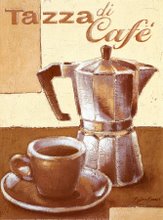
A day spent wandering in the city can not ignore what the romans call the… pausa caffè! This is not a common and banal coffee break but a real rite that the Romans love to do, over and over again, during the day. For us, the coffee is no longer just a drink, but an art that reflects a way of life and for this reason has billions of variations… macchiato, corretto, ristretto, lungo, in tazza piccola o grande, al vetro, con la schiuma e senza.....
You have to know, before entering in a bar, that:
-Caffè macchiato: is a cup of coffee with a drop of cold milk
-Caffè corretto: is a cup of coffee with a drop of liquor (generally grappa)
-Caffè ristretto: strong coffee
-Caffè lungo: less strong
-Caffè al vetro: in a little glass cup (the experts say that the taste changes…)
-Caffè decaffeinato: without caffeine
-Caffè espresso: is the one made in the bar
-Caffè moka: is the one you made at home with our cofee machine
This is the right address, for your pausa caffè, when you are wondering near the Vatican:
Castroni via Cola di Rienzo 196 Roma Vatican
We like this place much because it not only offers a really good quality of caffee, but also has an excellent range of international and italian food products as pasta, tea, chocolates, pasta dressing….
A real pleasure... not only for the eyes!

lunedì 1 ottobre 2007

The cannonball of the miracle

Chiesa di San Bartolomeo all'Isola -Isola Tiberina-
In the chapel of the church of Saint Bartholomew upon the Isle, there is a large (14cm diameter) cannonball lodged in the wall where it struck it during the siege of Rome of June 1849. When it hit the building it was full of people , who went miraculously untouched. The cannonball, known for this reason as "of the miracle" was left in the wall as a "memento" of the event.
Miraculous Rome!

martedì 25 settembre 2007

Vecchia Roma

Yesterday Rome from Alinari
When you're in Rome don't miss the apointment with the photos in black & white of the ancient Rome at the art gallery of the Alinari Bros in Via Via Alibert, 16/A. Without a doubt i think this is the best way to get a present of the Eternal City!
Yesterday Rome from Alinari
The Alinari photographs are contact printed from the original glassplate negatives housed in the Historic Archive. This manual technique of reproduction is the same used during the 19th century. The prints are made in black and white or they can be sepia toned and they can be also mounted on wood. These faithful reproductions are printed on special photographic paper and manually created in order to offer a product that is of unique quality and prestige. Is also possible to buy on line but if you're in Rome spend time there.... is not a lost time!
Tempio di Vesta as it looks today

lunedì 24 settembre 2007

The river under the alter

Some people say that Rome has not a big historical center...and i seriously ask my self "which Rome have you ever seen?! not mine sure!". Sometime i think we should have 3 life to know Rome's beauties...one in order to see what is "over" our head, one to see what is "in front" and one to see what is "under". But life is only one so, when you're wandering in this beautiful city don't forget to look over, in front and under all at once! Here is an example:
The church of Saint Clement. Over: the beautiful and restored frescos of Masolino da Panicale and the 12 th cent. mosaics of the apse.
Under: two layer of history. The older church built in the fourth century and dedicated to San Clemente, the third pope after St Peter and underneath it again, the roman buildings which are, themselves, made up of different "strati".
In front: when you look in front of you, at the alter, beware and listen....under the very ancient basilica of Saint Clement there is a small underwater river that has a little waterfall! Onetime they were both visible but in late, for reasons of prudence, they were hidden by a wall through which one can still today distinctly hear the noise of running water.
Don't forget...always over, in front and under!